5 Early Warning Signs of Kidney Disease You Shouldn't Ignore
Dr. Sukhvir Kaur Gill • Jun 1, 2026 • Disease Awareness
Your kidneys quietly do some of the most important work in your body — filtering waste, balancing fluids, controlling blood pressure and keeping your bones and blood healthy. The trouble is that kidney disease usually develops slowly and silently. Many people feel completely well until a large part of their kidney function is already lost.
The good news is that when kidney problems are caught early, their progression can often be slowed dramatically — and in many cases, dialysis can be delayed or avoided. That is why recognising the early warning signs is so important. Here are five you should never ignore.
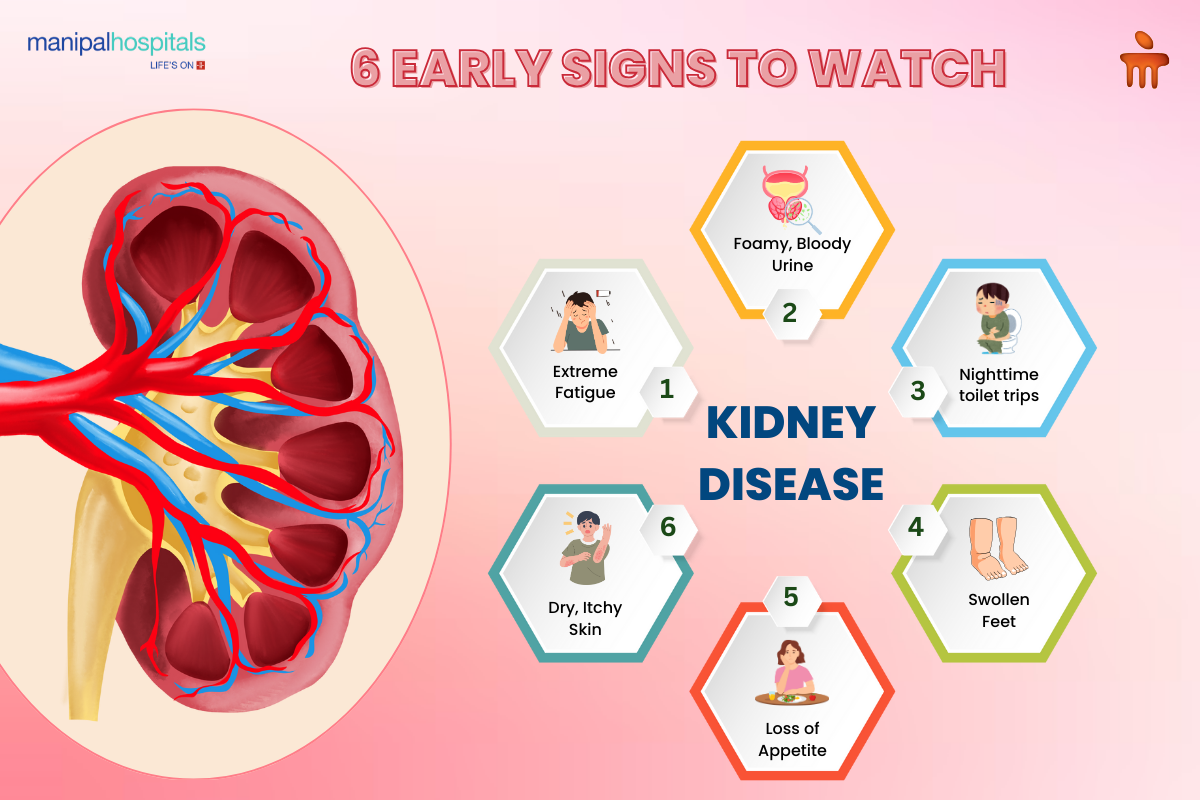
1. Swelling in the legs, ankles or feet
When the kidneys cannot remove extra fluid and sodium from the body, that fluid builds up — most visibly in the lower legs, ankles and feet, and sometimes around the eyes in the morning. Puffiness that comes and goes, or shoes feeling tight by the evening, can be an early clue that the kidneys are struggling.
2. Changes in how you urinate
Pay attention to changes such as needing to pass urine more often at night, foamy or bubbly urine (a sign of protein leaking through), blood in the urine, or passing noticeably less urine than usual. These changes can be among the earliest signs of kidney trouble and should always be evaluated.
3. Constant tiredness and difficulty concentrating
Healthy kidneys produce a hormone that helps your body make red blood cells. When kidney function falls, this can lead to anaemia, leaving you persistently tired, weak and unable to focus. Many people put this fatigue down to a busy life — but unexplained, ongoing tiredness is worth investigating.
4. High blood pressure that is hard to control
The kidneys and blood pressure are closely linked. High blood pressure can damage the kidneys, and damaged kidneys can in turn push blood pressure higher. If your blood pressure is consistently high or difficult to control despite medication, your kidneys should be checked as part of the assessment.
5. A rising creatinine on your blood tests
Creatinine is a waste product that healthy kidneys filter out. A rising creatinine level — or a falling eGFR — on a routine blood report is one of the most reliable early signals of reduced kidney function, often appearing before any symptoms at all. If a report flags this, do not ignore it.
Who should be especially watchful?
Some people are at higher risk and benefit from regular kidney check-ups: those with diabetes, long-standing high blood pressure, a family history of kidney disease, or who are over 60. For these groups, a simple yearly blood and urine test can catch problems long before they become serious.
The bottom line
Kidney disease is far easier to manage when it is found early. If you recognise any of these signs — or fall into a high-risk group — a short consultation with a nephrologist can give you clear answers and peace of mind. Early action today can protect your kidney health for years to come.
Have questions about your kidney health?
Book a consultation with Dr. Sukhvir Kaur Gill for clear, expert guidance.
Book a Consultation